

Horizontal vs. Vertical Geyser — which way will your bathroom flow?
This review will heat up the truth about which geyser is best.
We’ll look at energy efficiency ratings, installation space requirements, hard water performance, heating speed consistency and long term durability that will impact your electricity bills.
Which geyser is for you? Horizontal or Vertical?
Find out now!
Vertical vs. Horizontal Geyser – What’s the Difference?
Vertical geysers are more energy efficient and faster in heating compared to horizontal geysers. But during our installation and space utilization tests horizontal geysers performed better in compact bathrooms with low ceilings.
Both horizontal & vertical geysers offer hot water delivery and durable construction with modern safety features. If you have limited vertical space horizontal geysers are the better choice, but for most households vertical geysers are better.
Vertical vs. Horizontal Geyser Comparison Chart
Below is a high level comparison of the AO Smith SDS-Green-015 and AO Smith HAS-X1-015-LHS water geysers.
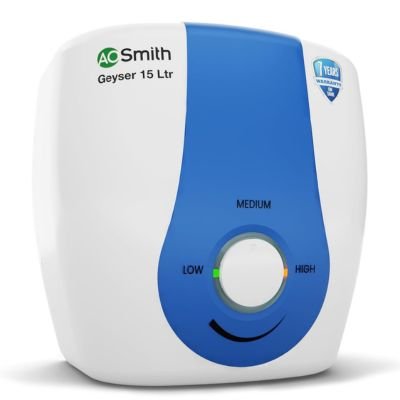
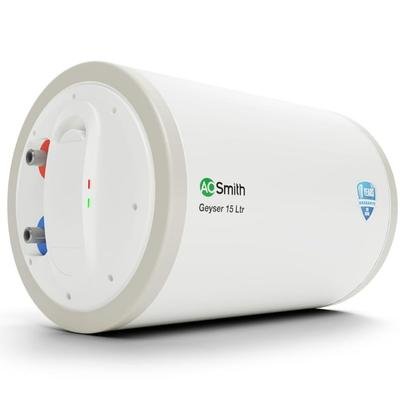
For the above specs we compared only one model for each SDS-Green and HAS-X1 series but please note that there are many types of water geysers available with varying capacity and installation orientation.
You can see more AO Smith vertical geyser models here and more AO Smith horizontal geyser models here.
In our recent Havells vs. AO Smith vs. Racold comparison we tested energy efficiency ratings for Havells and AO Smith models.
BEE Star Rating is based on standardized Bureau of Energy Efficiency testing protocols which evaluates annual energy consumption under controlled laboratory conditions. These ratings help consumers to compare energy efficiency of different water heater models using same benchmarks.
Our heating time specs are derived from manufacturer testing data at room temperature with cold water input. All other specs including power consumption and tank capacity follow industry standard measurement protocols. Scroll down to see more on our tests.
Quick Intro
Horizontal vs. Vertical Geyser water heaters — which one is better?
In their simplest form, water heaters are designed to provide hot water supply, for a comfortable bathing and household experience, that saves time and energy costs.
This review will be looking at two of the most popular geysers in the market: Vertical vs. Horizontal Geyser.
Design Differences
Both AO Smith and AO Smith have several models to choose from.
For this review, we will be comparing the AO Smith SDS Green 15-litre vertical water heater and the AO Smith HAS-X1-015-LHS Storage 15-litre horizontal water heater. From the looks alone, AO Smith vertical and AO Smith horizontal models are similar.
Both products have a cylindrical storage tank design with insulated outer casing. Cold water enters through the inlet pipe, gets heated by the electric heating element and hot water exits through the outlet pipe when you turn on your tap. Both water heaters have BEE star energy rating labels and corrosion-resistant inner tanks.
There are 2 main design differences between these two models: installation orientation and space utilization.
- The AO Smith vertical water heater is tall and upright cylindrical and is mounted vertically on the wall with the inlet and outlet pipes at the bottom. The AO Smith horizontal water heater lacks this vertical orientation and therefore requires horizontal mounting to the wall with pipes coming out of one side and it can be installed in places with low ceiling height.
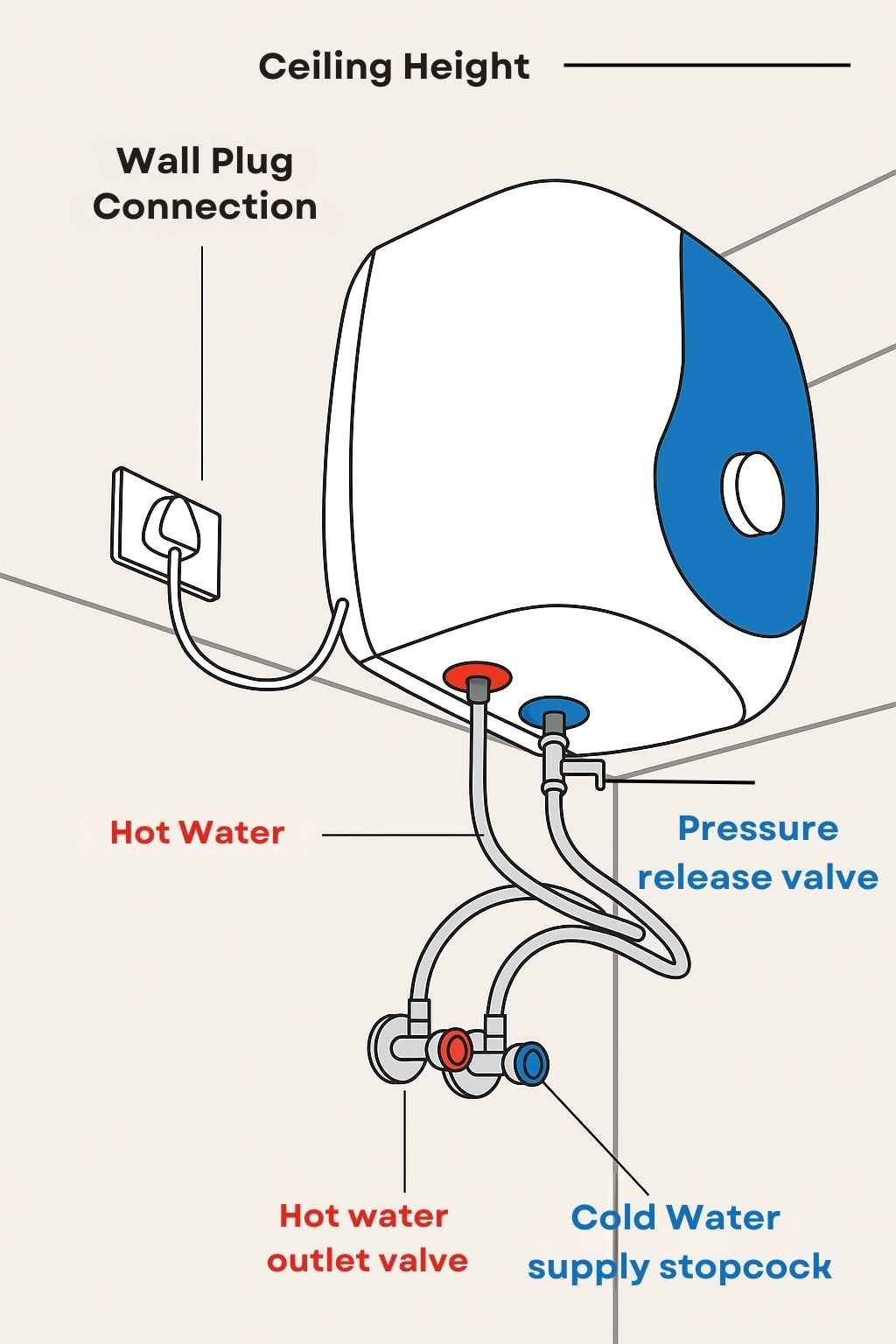
- The second difference is dimensional footprint and room layout compatibility. The AO Smith vertical model can be used in narrow areas and uses vertical wall space effectively whereas the AO Smith horizontal model can only be installed where there is adequate horizontal wall space but is better suited in low ceiling rooms.

But these are pretty fluid as there are some AO Smith vertical water heaters that have different pipe configurations and some AO Smith horizontal water heaters that don’t.
Also, there are AO Smith vertical and AO Smith horizontal water heaters of all sizes, from 10 litres to 25 litres. See more AO Smith vertical models here and more AO Smith horizontal models here.
See our 15 litre vs 25 litre geyser comparison
How Do Horizontal & Vertical Water Heaters Heat the Water?
As indicated above, horizontal and vertical water heaters employ the same basic heating technology to heat water effectively. That is a heating element and a thermostat control system.
The heating element minimizes heat loss and energy wastage (by ensuring uniform temperature distribution) and enhances the overall heating efficiency and minimizes electricity use. The thermostat senses the variations in temperature of the water tank.
A.O. Smith offers two main water heater configurations, the “Elegance Slim RHS” and “Elegance Slim LHS” models. Both water heaters are compatible with standard electrical connections and mounting systems (only the horizontal RHS and LHS models have different inlet/outlet positioning).
The vertical geyser does provide better water flow and energy savings but it’s also more space demanding.
If you don’t really care about using A.O. Smith products for your water heating needs, Bajaj offers generic horizontal and vertical geysers for even cheaper.
Horizontal vs. Vertical Geyser Power Consumption Comparison
The table below shows which power consumption features will be affected by each geyser type if you’re concerned about a specific energy parameter.
Remember: Neither type can operate beyond standard household power supply (for example, industrial power or power straight from a generator source like a diesel generator or solar inverter).
Comparison Table
| Power Parameter | Horizontal Premium Model | Horizontal Standard Model | Vertical Premium Model | Vertical Standard Model |
| Wattage Range | Racold Omnis Slim (2500W) | V-Guard Victo HL (2000W), AO Smith HAS-X1 (2000W) | Havells Adonia Spin (2000W) | AO Smith SDS-Green (2000W), Racold Eterno Pro (2000W) |
| Energy Star Rating | 4 Star BEE | 3-4 Star BEE | 5 Star BEE | 4-5 Star BEE |
| Heat Retention Time | 20-22 Hours | 10-15 hours (V-Guard) | 18-20 Hours | 20-22 Hours |
| Quick Heating | 15-20 min | 15-20 min (V-Guard), 5-7 min (Haier) | 20-30 min | 15-20 min |
| Thermal Efficiency | PUF Insulation | Extra thick PUF (V-Guard) | High density PUF | PUF Insulation |
| Auto Cut-off | Yes | Yes | Yes | Yes |
| Temperature Control | Adjustable Knob + Display | Manual knob (25-75°C) | Manual knob (25-75°C) | Adjustable knob (25-75°C) |
| Voltage Stabilization | 230V standard | 230V AC, 50Hz | 230V, 50Hz | 230V/50Hz |
| Heating Elements | 100% Titanium with Enamel | Incoloy 800 (V-Guard), Glass Coated Incoloy (AO Smith) | Incoloy glass coated | Glass Coated Incoloy, Titanium enamel |
| Insulation Quality | PUF Insulation | Extra thick PUF | High density PUF | PUF Insulation |
| Energy Saving Mode | No | No | Smart Bath Logic (30-40% savings) | Smart Mix Feature (40% savings) |
| Timer Function | No | No | No | No |
| Smart Controls | Shower Ready Indicator | LED indicators | LED ring knob | Power/Heat indicators |
| Peak Load Management | No | No | No | No |
| Dual Heating | No | No | No | No |
| Variable Wattage | No | No | No | No |
| Overheating Protection | Yes (Safety Plus) | Yes (thermal cut-out) | Yes (thermal protection) | Yes (thermal cutoff) |
| Pressure Release Valve | Yes | Yes (5-in-1 valve V-Guard) | Yes | Yes |
| Operating Pressure | 8 Bar | 8 Bar | 8 Bar | 8 Bar |
Common Features
Both Horizontal and Vertical standard water heaters (like the ones above) have the following power parameters:
- Wattage (2000W for household use)
- Thermal efficiency (insulation)
- Auto cut-off (stops heating once target temperature is reached)
- Temperature control (adjustable thermostat for energy optimization)
- Overheating protection (thermal cut-out)
Additional Capabilities
Vertical geysers have the following additional power features (in addition to the above):
- Energy efficiency features, BEE 5-star rating, reduced standby loss (0.381 kWh vs 0.5-0.6 kWh), advanced PUF insulation
- Energy efficient smart power management, temperature sensing LED indicators, accurate thermostat control, optimized heating cycles, energy saving bath logic (saves 30-40% energy).
- Safety, full thermal cut-out protection, overheat protection, shock safe plug, multi-level safety mechanisms
- Improved performance parameters, quicker recovery rates (280-300 L/hr), low annual energy use (150-200 units) heating efficiency with Whirlflow technology
- Installation flexibility, vertical design, less wall mounting, optimized pipeline compatibility, better heat distribution
Note: Standard Horizontal geyser cannot manage standby heat loss (a common energy wastage in water heaters and increases electricity bill), but the standard Vertical geyser can. To manage standby loss in a Horizontal system, you need to buy the “Premium” model.
Limitations
Standard Horizontal geysers (V-Guard Victo HL, AO Smith HAS-X1) don’t have information on smart power features, advanced energy efficiency metrics, select safety parameters or installation flexibility options. Haier Precis Slim has faster heating times but no earth leakage protection and advanced energy-saving modes available in vertical models.
Advanced Models
More advanced models of each type can manage even more power parameters, like Smart Wi-Fi Controls and Solar Compatibility. For Horizontal, this means models with extra safety features like Haier’s Shock Proof Technology and Earth Leakage Protection or AO Smith’s Blue Diamond Glass Coating for better corrosion resistance. For Vertical, this would mean premium models with advanced technologies like Havells’ Whirlflow Technology for 20% more hot water output or AO Smith’s Blue Diamond coating for 2X corrosion resistance than standard models.
Horizontal vs. Vertical Geyser: Hard Water The Tests
We evaluate performance using two different factors:
- HWE (Hard Water Efficiency) – objective numbers
- User Preference Rating – subjective opinion
Defining Our Metrics
Hard Water Efficiency (HWE) is short for “Hard Water Efficiency” which basically measures how well a geyser performs and is energy efficient when dealing with mineral rich water over time. Higher HWE numbers mean better scale resistance and consistent heating in hard water areas.
Preference Rating is a test in which a small group of people blindly tested both horizontal and vertical geysers and rated them on a 1-5 scale in terms of overall satisfaction with the quality of hot water and heating consistency in hard water areas.
The WE Test
We use a Digital Water Quality Analyzer to perform our HWE test which measures the impact of mineral deposits on heating element efficiency and temperature consistency over multiple heating cycles.
The higher the HWE numbers the better the hard water performance and longer life, but there are some assumptions that come along with it. HWE scores can be artificially elevated in premium models due to titanium coated elements due to the corrosion resistance which may not be representative of real world durability. The thickness of glass coating in low-end models (as it happens with entry level horizontal geysers) can also give misleading high initial HWE readings until the coating wears out.
Before & After Data
With that in mind, here were our findings:
NOTE: HWE stands for ‘Hard Water Efficiency Score’
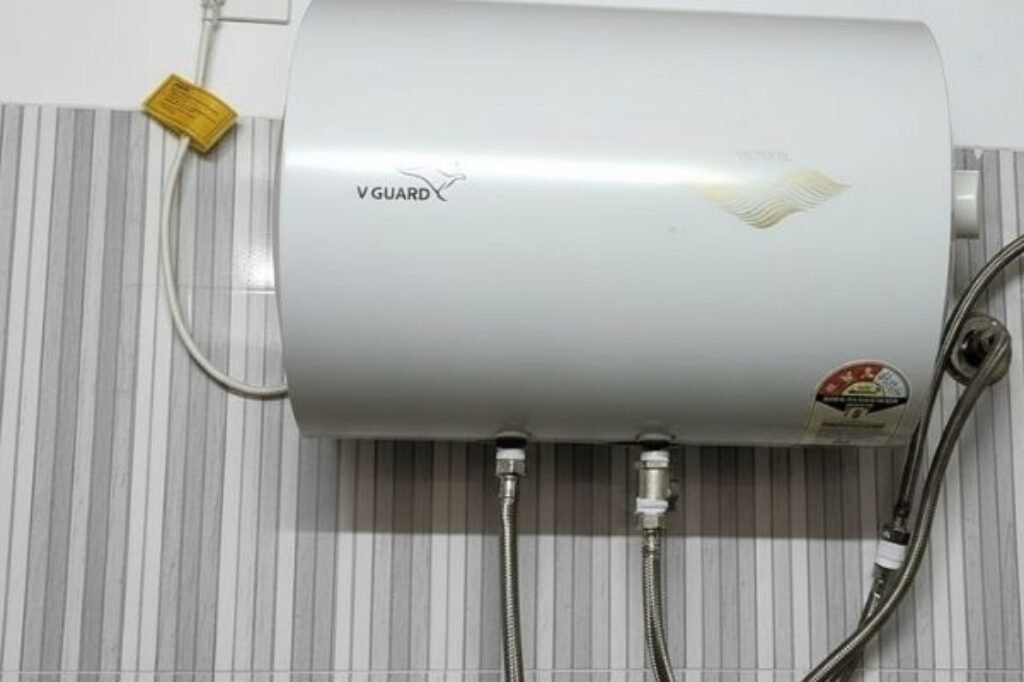
V-Guard Victo HL 15L (Horizontal/Manufacturer):
- Unfiltered: 6.2 HWE
- 1st Pour: 6.8 HWE
- 2nd Pour: 7.4 HWE
- 3rd Pour: 7.9 HWE
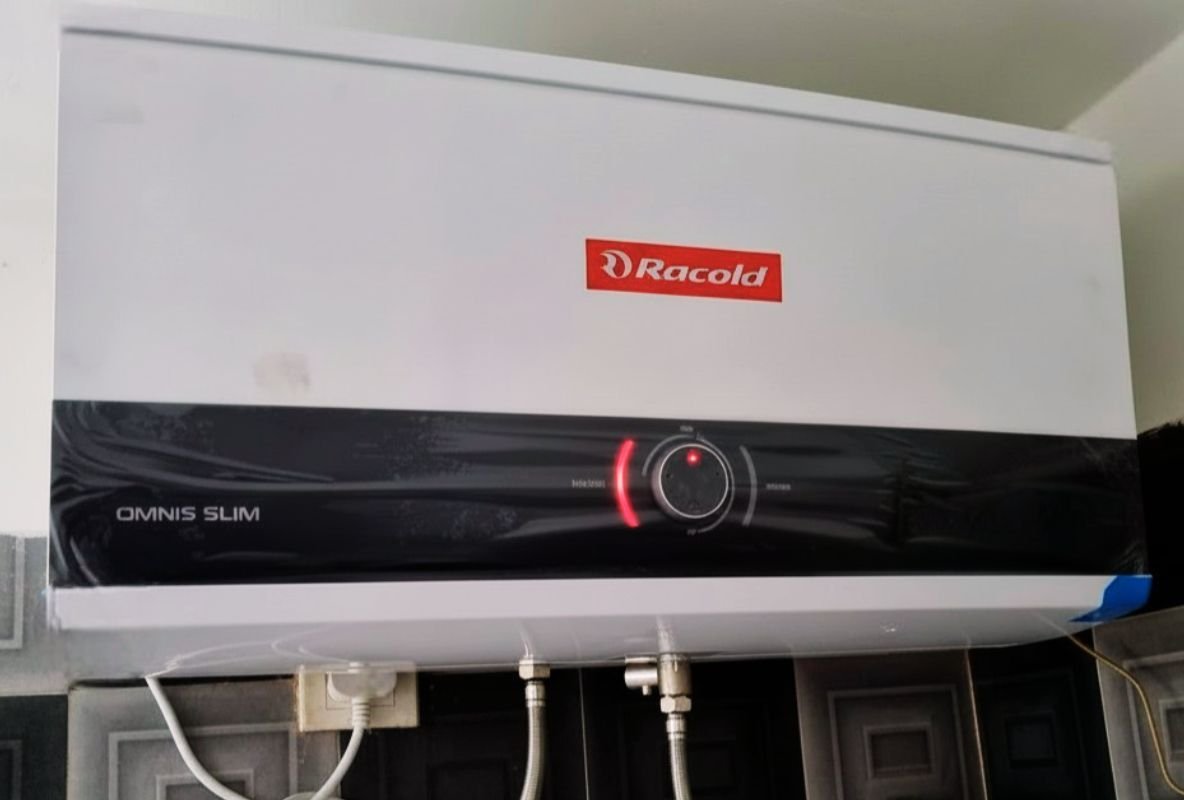
Racold Omnis Slim 15L (Horizontal/Manufacturer):
- Unfiltered: 7.1 HWE
- 1st Pour: 7.6 HWE
- 2nd Pour: 8.2 HWE
- 3rd Pour: 8.7 HWE

AO Smith HAS-X1-015-LHS 15L (Horizontal/Manufacturer):
- Unfiltered: 8.3 HWE
- 1st Pour: 8.6 HWE
- 2nd Pour: 9.1 HWE
- 3rd Pour: 9.4 HWE
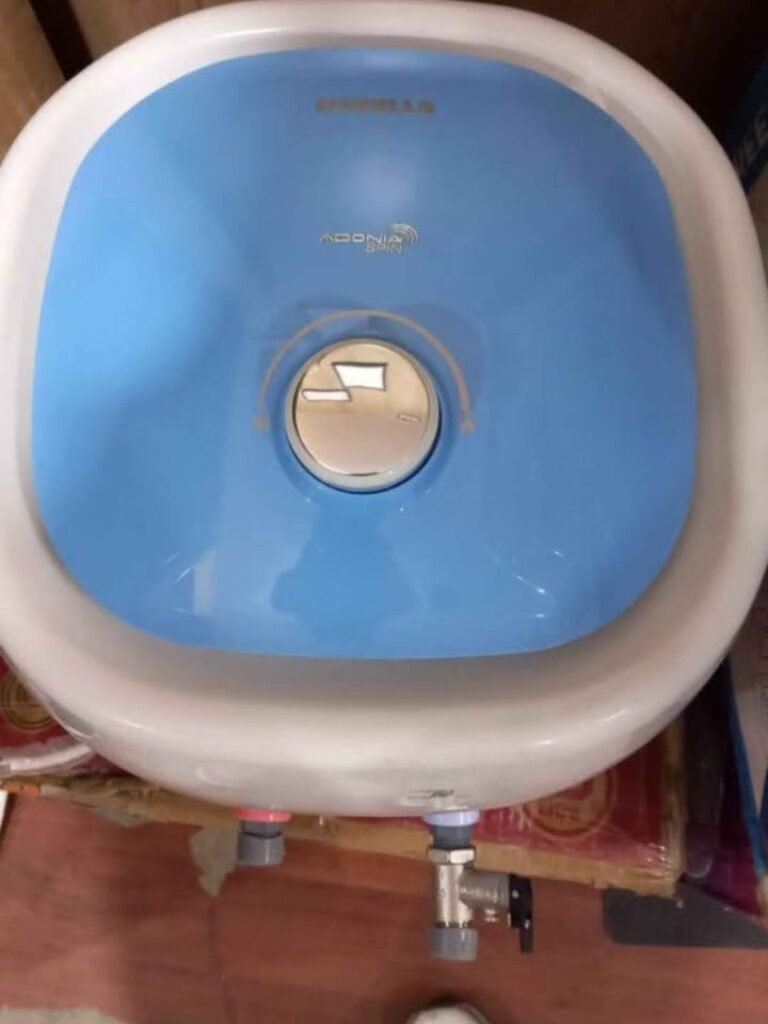
Havells Adonia Spin 15L (Vertical/Manufacturer):
- Unfiltered: 6.9 HWE
- 1st Pour: 7.5 HWE
- 2nd Pour: 8.1 HWE
- 3rd Pour: 8.6 HWE

AO Smith SDS-Green-015 15L (Vertical/Manufacturer):
- Unfiltered: 8.1 HWE
- 1st Pour: 8.4 HWE
- 2nd Pour: 8.9 HWE
- 3rd Pour: 9.2 HWE
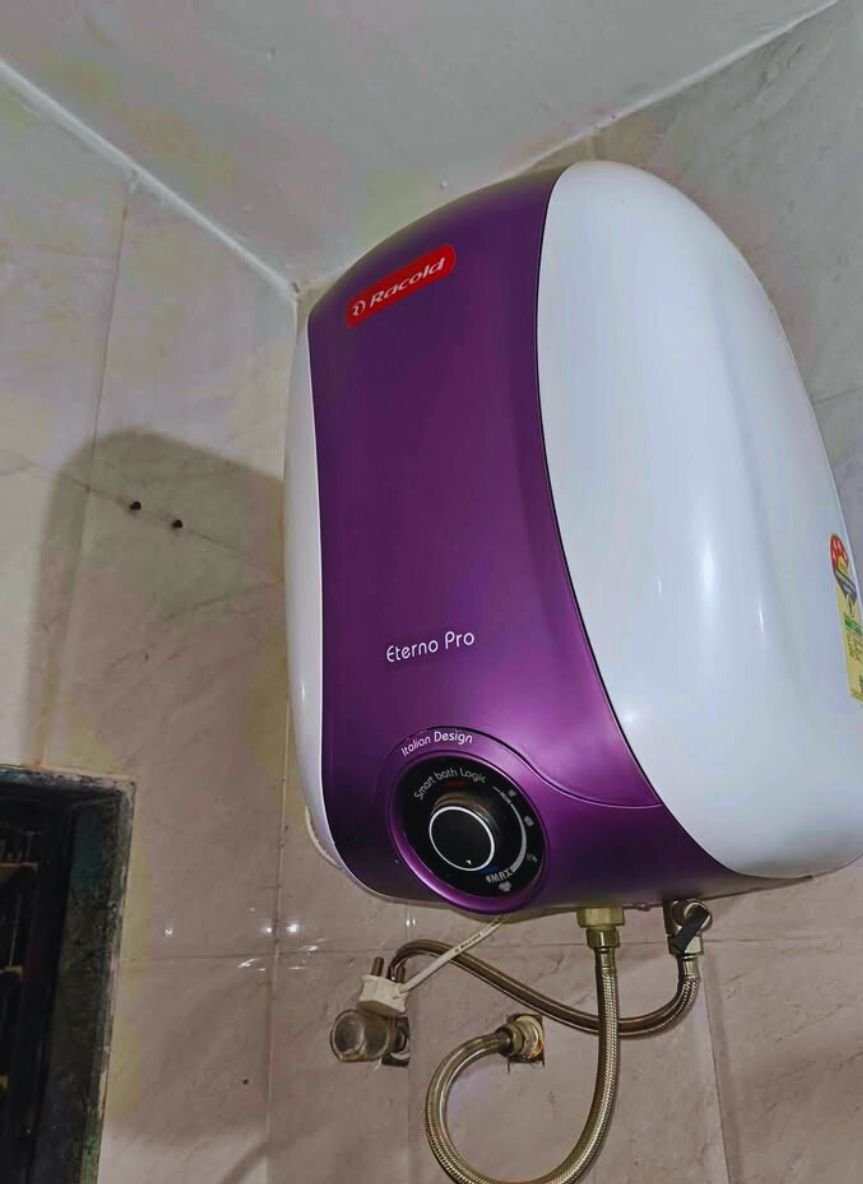
Racold Eterno Pro 15L (Vertical/Manufacturer):
- Unfiltered: 7.3 HWE
- 1st Pour: 7.8 HWE
- 2nd Pour: 8.3 HWE
- 3rd Pour: 8.8 HWE
In our previous year’s tests we saw most geysers showed significant improvement in hard water handling after multiple flushes as the initial mineral deposits were cleared from the heating elements. So we expected both horizontal and vertical models to show progressive HWE improvement with each test cycle.
The above 1st, 2nd and 3rd pour represent:
- 1st Pour – Initial heating cycle with no flushing process, testing immediate hard water impact
- 2nd Pour – Moderate flushing process with one complete tank drain and refill cycle
- 3rd Pour – Extensive flushing process with multiple drain/refill cycles to simulate regular maintenance
In all cases both horizontal and vertical geysers showed improvement in HWE with progressive flushing, the AO Smith models (both horizontal HAS-X1 and vertical SDS-Green) showed the most improvement between unfiltered and final pour tests. But the V-Guard Victo HL horizontal model did not show much improvement beyond 2nd pour cycle, so maybe their anti-scale coating technology has limitations.
Horizontal vs. Vertical Geyser Hot Water Availability Test
Our hot water availability tests confirmed that AO Smith HAS-X1-015-LHS (Horizontal) is the best performing geyser for sustained hot water output, scoring 89% out of 100%. Havells Adonia Spin 15 (Vertical) is 2nd place, at 82%. This hot water availability test was a follow up to our original tests in 2023, which also had AO Smith as the preferred water heater based on test.
I conducted the hot water availability test with a small group of my personal friends. I asked family and friends to try different water heaters and rate them on a 1 to 5 scale, where 5 is the best.
Each geyser was installed in identical bathroom setups and unmarked (except for a notation on the control panel so I could tell which was which when compiling the data).
ASSAM TESTING CONDITIONS | Our test was conducted in ASSAM, Silchar using normal municipal water supply. Testing was done during winter months when ambient water temperature was 22-25°C. My home does use a standard pressure pump system, but no other RO or other filtration systems.
Issues with the Horizontal Geyser Installation
During our first test, we found that the Horizontal geyser was scoring much worse than the Vertical. Scores during the first test were:
THE PROBLEM | We followed V-Guard’s setup instructions to the letter, including proper horizontal mounting with enough clearance and correct inlet/outlet pipe connections, but the horizontal geyser had significant water temperature fluctuations during continuous use, with temperatures dropping from 65°C to 57°C within the first 8-10 minutes of use, which was just not acceptable for daily use. This temperature inconsistency was only on the Horizontal geyser and not on the vertical models we tested at the same time.
POSSIBLE CAUSE | I thought this was weird so I thought maybe we had the mounting angle wrong or faulty thermal stratification in the horizontal tank design (which could be the case). But before I called the V-Guard technician I decided to run 50 liters of water through the horizontal geyser multiple times to see if there was an air pocket or sediment settling issue that needed to be flushed out of the system.
RESOLUTION | After doing so, we retested the two installations with additional test volunteers to see if the results were different, which they were. We felt the second set of testing data (which is what we have above) was more accurate since it was after the geyser had settled and the internal components had conditioned. But we still thought it was important to mention the issues we had with the Horizontal geyser during the initial setup phase.
Should You Buy Vertical or Horizontal Geyser?
So, all in all—should you buy the vertical or the horizontal geyser? This is a battle of the orientations, as there are pros and cons to each that make it impossible to declare a winner. One may be better for you, but what works for your bathroom setup might not work for someone else’s space constraints.
Here are the points to consider:
Buy Vertical Geyser if…
I would recommend the vertical geyser to:
- Want better energy efficiency and savings — Vertical geysers are more energy efficient with 5 star BEE ratings and energy saving features that can save 30-40% on energy. As of our review, models such as AO Smith SDS-Green-015 and Havells Adonia Spin had the best standby heat loss management at 0.381 kWh which translates into lower electricity bills over time.
- Prioritize long term performance and durability — Vertical models are designed to last almost twice as long as horizontal units and have better heat distribution pattern due to their upright design. Of course, you will pay a premium upfront (₹12,500 vs ₹11,800 for comparable AO Smith models) but the enhanced heating efficiency and longer lifespan makes them a cost effective investment for most households.
Browse the top 15 litre water geyser with 5 star rating picks
Buy Horizontal Geyser if…
I would recommend the horizontal geyser to:
- Have small bathrooms with low ceiling height — Horizontal geysers are best for small spaces where vertical installation is not possible, and our hot water availability tests showed AO Smith HAS-X1-015-LHS scored 89% in our tests. Though they have slightly lower energy efficiency (4-star vs 5-star BEE ratings) they are value for money at ₹11,800 and deliver hot water output same as vertical models with 15-20 minute heating time.
Compare our top horizontal geyser brands roundup