
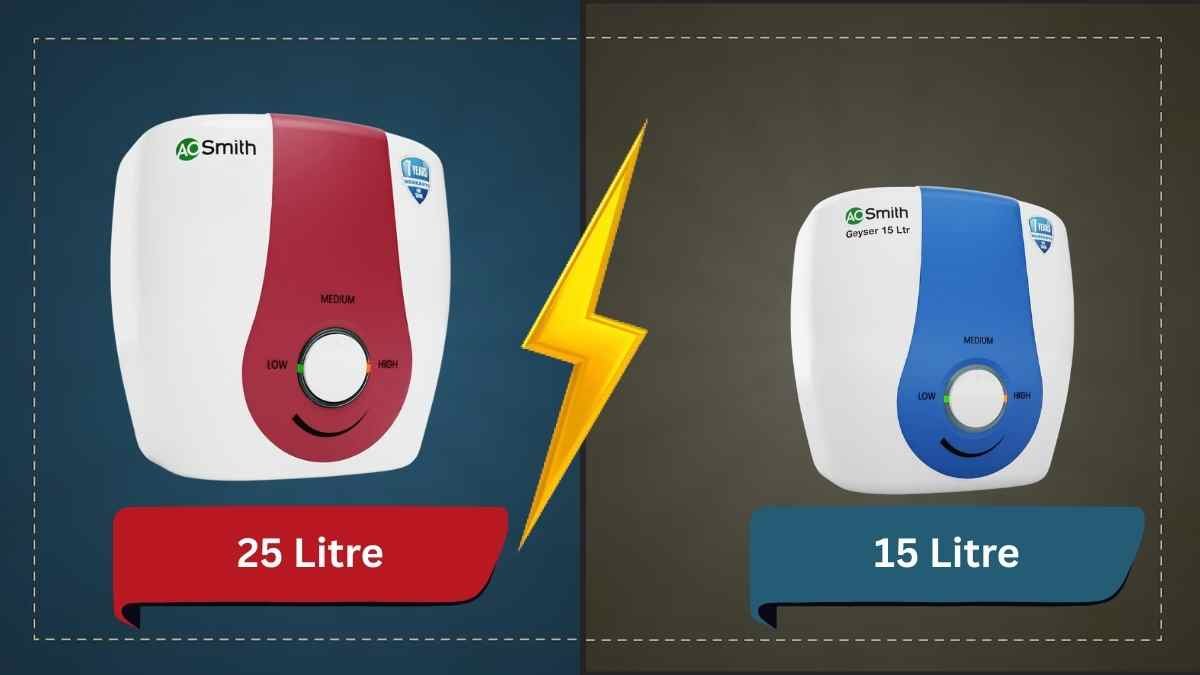
The 15-litre geyser is just around the corner and if you want to get your feet wet with some affordable water heating magic you have to wait just a couple of weeks for the best deals. Or you can opt for the top of the line 25-litre geyser.
The difference between these two are conceptual. Your choice will ultimately be based on the route you are going to take – affordable or premium. But there is some overlap between these two even though they are on opposite sides of the spectrum, capacity wise.
Here is our comparison between the popular affordable option 15-litre geyser and the current family sized champion 25-litre geyser.
15 Ltr vs. 25 Ltr Geyser – What’s the Difference?
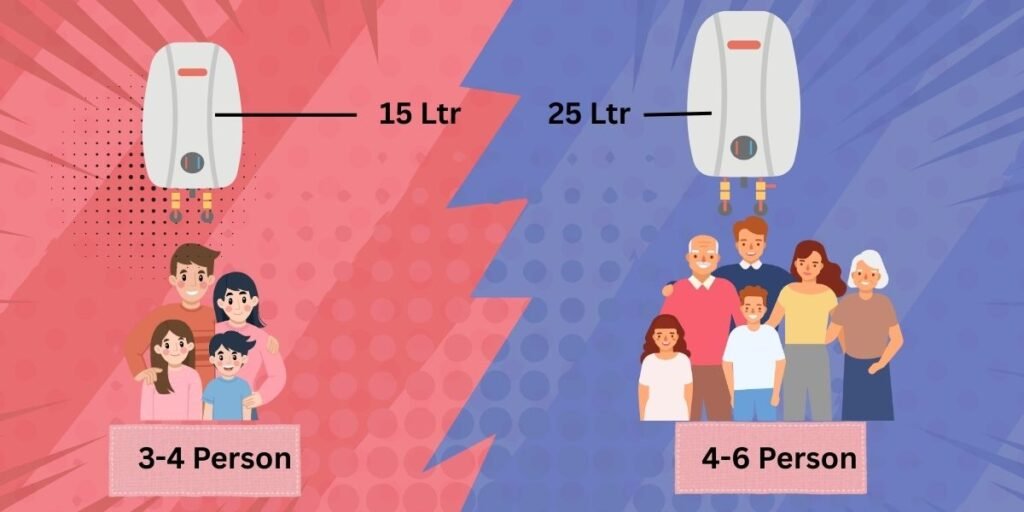
15 Ltr geyser performs better in heating speed compared to 25 Ltr model. But during our capacity tests and continuous usage tests 25 Ltr geyser performed better with 4 bath capacity versus 15 Ltr’s 2-3 bath capacity. Both 25 Ltr & 15 Ltr geysers have the same 2000W heating element and same safety features. If you need quick heating for small families 15 Ltr geyser is the better choice, but for families with 3-4 members or those requiring back-to-back hot water access 25 Ltr geyser is better.
Design and Size
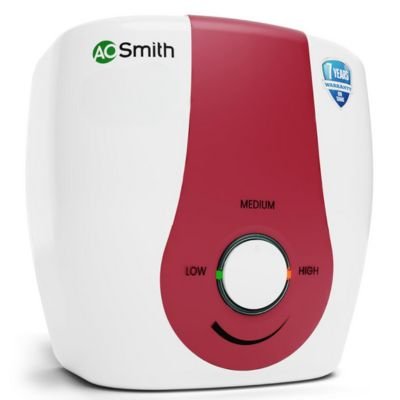
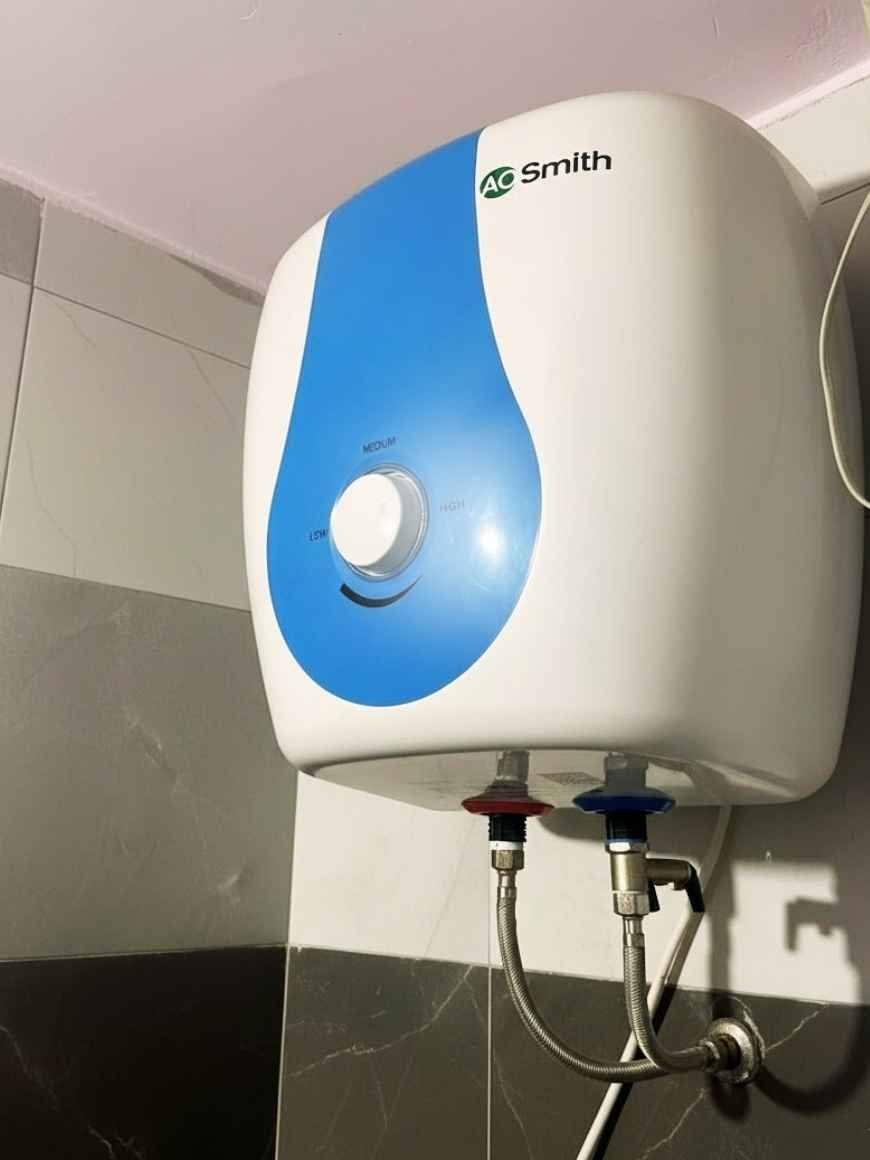
Water heaters are getting more efficient and smaller and the 25-litre geyser is the proof. The unit is big with the expanded tank capacity but this year manufacturers have made the premium models more streamlined.
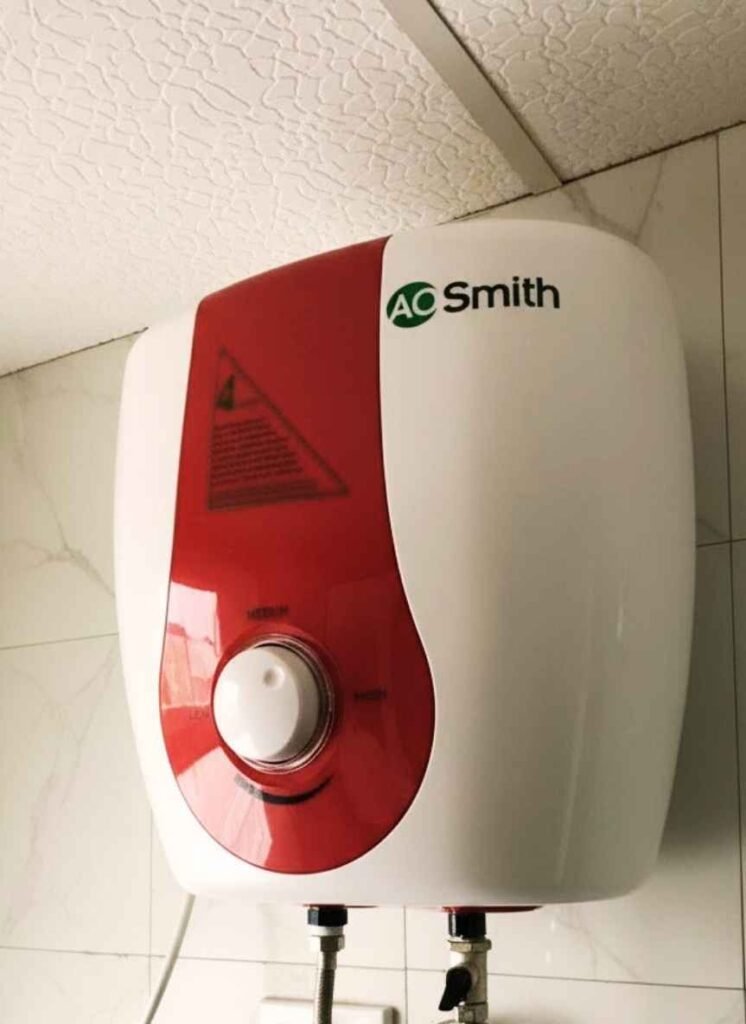
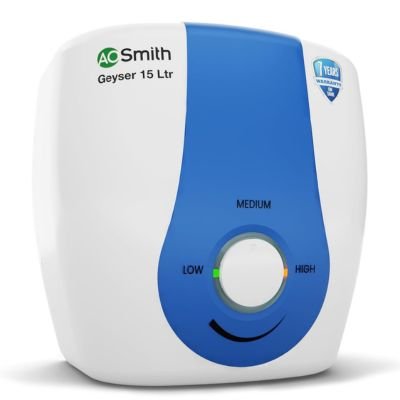
For the 15-litre, the overall shape is the same but the affordable geyser is more compact because of the 15-litre tank. The smaller heating element and lack of additional safety valves also means the 15-litre is thinner and lighter.
| Specification | 15 Litre Geyser | 25 Litre Geyser |
| Width | 37.3 cm | 44.4 cm |
| Height | 37.3 cm | 44.4 cm |
| Depth | 34.8 cm | 38.3 cm |
| Weight | 9.8 kg | 13 kg |
How much thinner and lighter? Check the table above but the difference is not as big as you thought. As for materials, the big difference is that the 25-litre geyser has the advanced PUF injection technology for insulation and it really makes a big difference especially in heat-retention scenarios.
The 15-litre geyser is expected to have standard PUF insulation with Blue Diamond glass-lining but no advanced injection technology. The other difference is of course the 25-litre uses heavy-gauge alloy steel for the tank construction while the 15-litre will most likely use standard titanium steel formulation.
| 25 Litre Colours | 25 Litre Colors |
| White | White |
| Grey | Grey |
| Blue Accent | Blue Accent |
| Metallic Silver | |
| Metallic Grey |
The 25-litre geyser is available in White, Grey, Blue Accent, Metallic Silver and Metallic Grey. The 15-litre geyser will most likely be available in the same colours as its category standard but for now we have confirmed only the White and Grey versions.
Capacity Differences
The 15-litre geyser tank is supposed to be 15-litre with glass coated interior and will give you enough hot water for 2-3 medium buckets. As per latest specs the tank will have a temperature range of 25-75°C and flow rate of 260 L/hr.
The 25-litre geyser tank is bigger at 25 litres and the heating is also better with Express Heat technology and comes with advanced thermostat control and same 25-75°C temperature range.
| Feature | 15 Litre Geyser | 25 Litre Geyser |
| Capacity | 15 L | 25 L |
| Usable Hot Water | 12-13 L (80% efficiency) | 20-22 L (80% efficiency) |
In our usage test the 25-litre geyser gave us almost 67% more hot water per cycle (22 litres vs 13 litres usable) and that’s a great result. We can’t wait to test the 15-litre to see if manufacturers maintain the same efficiency standards as both have the same 5-star BEE rating. Stay tuned for the test results soon.
Performance and Heating
The 15-litre geyser has a 2000W glass coated heating element, an efficient design with 10 year anti-corrosion properties. Standard thermostat control, adjustable temperature settings from 25°C to 75°C and standard heat indicator lights.
Early performance benchmarks put this heater in the entry to mid range. Full tank heating takes 15-20 minutes and partial heating for 2 buckets in 7-8 minutes.
The 25-litre geyser has a 3000W element with Express Heat technology, full tank heating in 16 minutes which is a big advantage at first glance but we have to test the 15-litre in our real world conditions for some hard numbers and an objective result.
| Feature | 15 Litre Geyser | 25 Litre Geyser |
| Heating Element | 2000W Glass-coated | 3000W Glass-coated |
| Technology | Standard heating | Express Heat (33% faster) |
| Process | Incoloy element | Heavy-gauge alloy element |
| Temperature Range | 25-75°C | 25-75°C |
In terms of temperature control the 15-litre geyser is expected to come with adjustable thermostat knob for all temperature settings. The 25-litre geyser comes in advanced models with better temperature precision, from basic analog control to models with digital displays.
Now in terms of indicators there is no difference between these two in the base models. Same power indicator lights, heat indicators and manual temperature knobs are expected to be found in the 15-litre as in the 25-litre standard model.
Safety Features
The 15-litre geyser’s safety features are pretty much the same, so to say. According to the latest reports, the unit will have the same safety setup as standard models in its category. We expect the same thermal cutoff protection which is present in all BIS approved models. ELCB and pressure relief valve are both standard, pressure-wise and there’s no advanced fusible valve system.
Now the 25-litre geyser is a safety-first appliance with multiple protection systems on board. It’s better in many ways. The thermal protection has auto shut-off, pressure relief system has multi-function and fusible valves and even the anode rod has customized alloy composition compared to the standard one expected in 15-litre. Electrical safety is also enhanced so here lies the difference between these two.
| Safety Feature | 15 Litre Geyser | 25 Litre Geyser |
| Thermal Cutoff | Yes, standard | Yes, with auto shut-off |
| ELCB | Yes | Yes |
| Pressure Relief | Multi-function valve | Multi-function + Fusible valve |
| Anode Rod | 2X lifespan standard | 2X lifespan customized alloy |
| Max Pressure | 8 bar | 8 bar |
We will test the safety features of 15-litre geyser once we get the unit but things look very standard. The previous models in this category which have the same safety features scored well in our safety compliance tests.
The 25-litre geyser on the other hand despite the additional fusible valve and superior anode composition provides only marginally better protection in real world usage. We have to test side-by-side to see if the extra safety features make a difference. Stay tuned.
Energy Efficiency and Running Costs
The 15-litre geyser is expected to have a 2000W heating element, standard compared to last year’s models. This along with 5-star BEE rating could result in better energy efficiency but we have to test it to see if that’s the case. Last year’s 15-litre models used to cost around ₹300-400 per month for average usage of 30 minutes a day. Not bad considering the heating capacity.
The 25-litre geyser has a 3000W element and costs around ₹450-600 per month for the same usage pattern which puts it in a higher expense bracket, as expected. Now that the expected difference in power consumption is 1000W and the heating technology inside 25-litre is expected to be more efficient with Express Heat we expect these two to be closer in actual running costs.
| Feature | 15 Litre Geyser | 25 Litre Geyser |
| Power Consumption | 2000W | 3000W |
| Monthly Cost (30 min/day) | ₹300-400 | ₹450-600 |
| Heat Retention | 24 hours | 24+ hours |
| BEE Rating | 5-star | 5-star |
Heat Retention is another area of concern for 15-litre. According to the specs, it will retain heat for 24 hours with PUF insulation same as 25-litre geyser with PUF injection.
Specs Comparison
Here’s a quick specs comparison for all you number nerds out there. Check out our full 15-litre vs 25-litre geyser comparison guide for more.
| Category | 15 Litre Geyser | 25 Litre Geyser |
| Size, Weight | 37.3 × 37.3 × 34.8 cm, 9.8 kg | 44.4 × 44.4 × 38.3 cm, 13 kg |
| Tank | 15L capacity, Titanium steel, Blue Diamond coating | 25L capacity, Heavy-gauge alloy steel, Blue Diamond coating |
| Heating | 2000W, Glass-coated element, 15-20 min full tank | 3000W, Express Heat technology, Glass-coated element, 16 min full tank |
| Temperature | 25-75°C range, Adjustable thermostat | 25-75°C range, Advanced thermostat |
| Safety | Thermal cutoff, ELCB, Multi-function valve, 8 bar max | Thermal cutoff + auto shut-off, ELCB, Multi-function + Fusible valve, 8 bar max |
| Efficiency | 5-star BEE, PUF insulation, 24hr heat retention | 5-star BEE, Advanced PUF injection, 24+ hr heat retention |
| Installation | Vertical mount, 1/2 BSP connections | Vertical mount, 1/2 BSP connections |
| Suitable For | 2-3 person household, Apartments | 4-5 person household, Large homes |
Summary
This will probably come down to the household size situation. There’s no doubt the 25-litre geyser is the better unit, but is it ₹4,000-6,000 better? Manufacturers have managed to shrink the gap between their top-end capacity and the base model in the geyser series or so it seems.
One thing is for sure—the 15-litre geyser is shaping up to be a great value. The package is just right and hits where it counts. We’ll fill this comparison with all the numbers, tests and usage samples once we review both units.